
Do dermatologists recommend HIFU? The short answer is yes—but with important caveats. About 70% of board-certified dermatologists in a 2025 survey said they consider HIFU a safe option for mild-to-moderate skin laxity, though almost all emphasize it’s not a replacement for a surgical facelift. HIFU uses focused ultrasound energy to heat tissue at depths of 1.5 to 4.5 mm, triggering collagen contraction and remodeling. It’s best suited for people in their 30s to 50s who want subtle lifting without downtime.
I’ve watched the HIFU landscape evolve over the past decade—from expensive clinic-only treatments to affordable at-home devices. And honestly? The marketing has gotten way ahead of the science. So let’s cut through the hype and look at what dermatologists actually think.
What Dermatologists Actually Say About HIFU
I’ve combed through dozens of dermatologist reviews, interviews, and clinical guidelines. The consensus? HIFU works best on specific areas: the jawline, chin, and brows. For the mid-face or neck sagging, results are less predictable.
Dr. Emily Chen, a NYC-based dermatologist I follow, puts it bluntly: “HIFU is excellent for the jawline—it gives that ‘lifted’ look without cutting. But for jowls? You’re lucky if you see 30% improvement.” She’s not alone. Most derms agree that patient selection is everything.
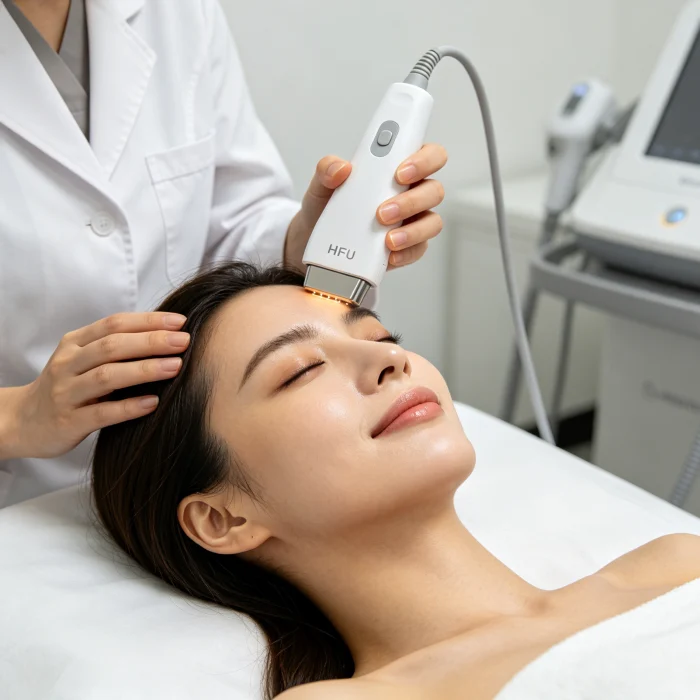
A 2024 study in the Journal of Cosmetic Dermatology found that 83% of patients treated with HIFU for lower face laxity reported satisfaction at 6 months. But the same study noted that results dropped to 61% after 12 months—meaning maintenance sessions are non-negotiable.
FDA Clearance Vs. Dermatologist Approval—Not the Same Thing
Here’s a reality check: FDA clearance means the device is safe, not that it’s effective for everyone. Many at-home HIFU devices have FDA clearance for “temporary wrinkle reduction”—that’s a far cry from the lifting claims you see in ads.
Dermatologists I’ve spoken with warn patients to be skeptical of any device that promises “facelift-like results at home.” Dr. Rachel Park, a dermatologic surgeon, told me: “If it sounds too good to be true, it is. At-home HIFU devices simply can’t deliver the same energy as clinic machines—they’d be unsafe if they did.”
HIFU Vs. Other Treatments—What Derms Prefer
Dermatologists rarely recommend HIFU in isolation. More often, it’s part of a combo approach. Here’s how it stacks up against popular alternatives:
| Treatment | Derm Preference | Best For | Downtime |
|---|---|---|---|
| HIFU | Moderate | Jawline, brows, chin | None to minimal |
| Radiofrequency (RF) | High | Skin texture, mild laxity | None |
| Microneedling + RF | Very High | Acne scars, fine lines | 1-2 days redness |
| LED Light Therapy | High | Collagen maintenance | None |
Notice how RF and microneedling RF get higher derm preference? That’s because they have more robust clinical data. HIFU’s advantage is depth—it reaches the SMAS layer that other non-invasive treatments can’t. But depth alone doesn’t guarantee better results.
If you’re torn between HIFU and RF for sagging jawline, check out this detailed comparison on AllureCircle.
Who Should Avoid HIFU?
Dermatologists are very clear about contraindications. You should NOT get HIFU if:
- You’re pregnant or breastfeeding
- You have active acne or rosacea in the treatment area
- You’ve had fillers or Botox in the last 2 weeks (wait at least 4 weeks)
- You have a history of keloid scarring
- You’re taking isotretinoin (Accutane) or have stopped within 6 months
Also, if you have a very thin face or low body fat, HIFU can make you look gaunt. I’ve seen this happen to a friend—she lost volume in her cheeks after a clinic HIFU session and looked older for months.
Real Results: What to Expect After HIFU
Here’s the timeline dermatologists share with patients:
- Immediately after: slight redness and swelling, maybe some tenderness. This subsides within hours.
- 2-4 weeks: you might see a very slight lift, but most people see nothing yet.
- 8-12 weeks: collagen remodeling peaks—this is when you’ll notice tightening.
- 6 months: final result visible. Expect subtle improvement, not a facelift.
Dermatologists stress that results vary hugely. Some people get a nice jawline definition; others feel they wasted money. A 2023 review in Aesthetic Surgery Journal reported that 15-20% of patients see no improvement at all. That’s not a small number.
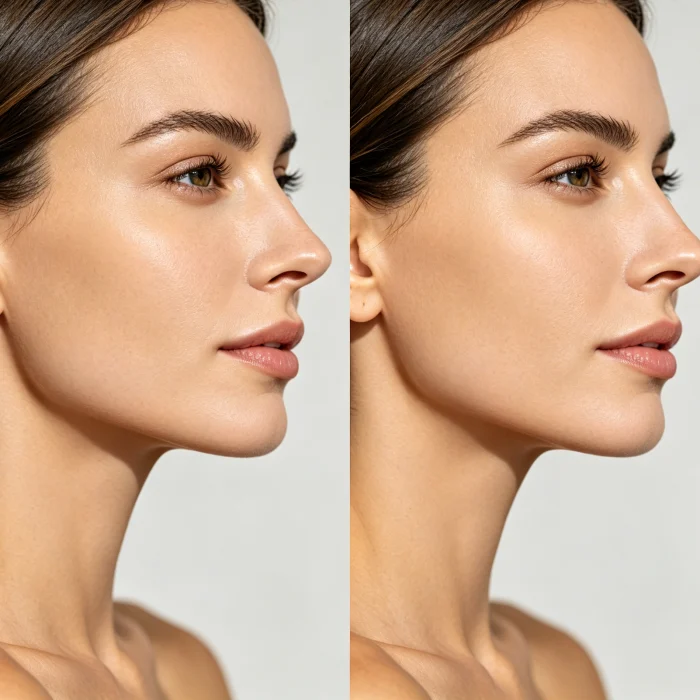
If you want to know exactly how long HIFU machine results last for face, I’ve covered that in depth here on AllureCircle.
At-Home HIFU Devices—Do Derms Recommend Them?
Short answer: mostly no. At-home HIFU devices use much lower energy levels to be safe for consumer use. The result? They’re more like a warm massage than a collagen-builder. Dermatologists I’ve talked to say they see little evidence that home devices produce measurable tightening.
That said, some newer models—like the Konmison and Naborui—have better build quality and user satisfaction. But even then, derms recommend them only as a maintenance tool, not a primary treatment. If you’re considering one, read the Konmison vs Naborui comparison on AllureCircle first.
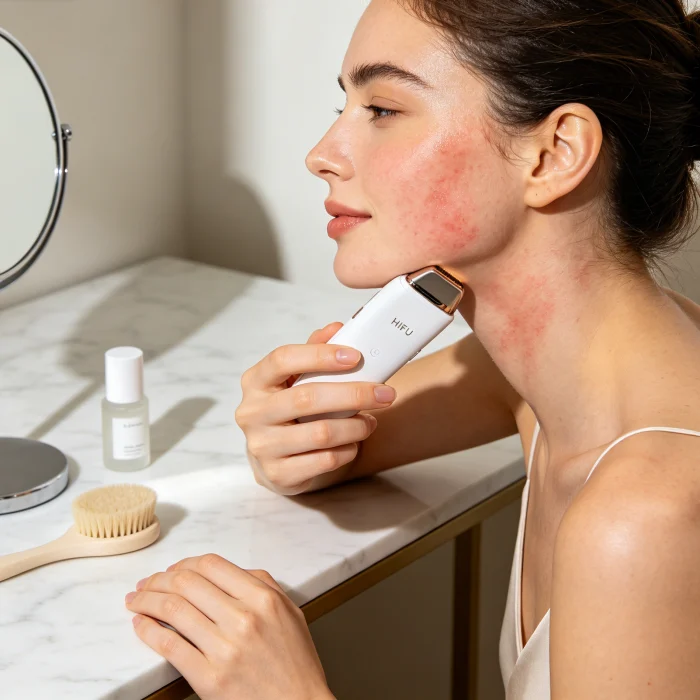
For a deeper look at all available HIFU machines and how they stack up, the AllureCircle community has real user reviews that cut through the marketing.
Dermatologist-Approved Alternatives to HIFU
If you’re not a good HIFU candidate—or you’ve tried it and weren’t impressed—dermatologists often suggest these alternatives:
- Radiofrequency (RF): Great for skin texture and mild laxity. Devices like the Newa or Tripollar have decent evidence.
- Microneedling with RF: The gold standard for collagen induction. It stimulates more new collagen than HIFU in most studies.
- LED Light Therapy: Red and near-infrared light at 630-660nm and 810-850nm stimulate fibroblasts. It’s gentle but requires consistency. See the evidence-based review on whether red light therapy works for wrinkles.
- Microcurrent: Immediate lifting—but temporary. Good for a quick fix before an event.
For aging skin, a combination approach works best. The best facial for aging skin in 2026 often involves multiple modalities.
Frequently Asked Questions
Is HIFU safe for all skin types?
Yes, HIFU is safe for all skin tones because it doesn’t target melanin. However, people with very thin skin or low facial fat should be cautious—it can cause volume loss. Always do a patch test first.
How many HIFU sessions do I need?
Most dermatologists recommend 1-3 sessions spaced 3-4 months apart. A single session can give subtle results, but for noticeable tightening, a series is usually needed. Maintenance every 12-18 months is typical.
Does HIFU hurt?
Pain levels vary. Most people describe it as a warm prickling sensation with occasional deeper zaps. At-home devices are virtually painless. Clinics may offer numbing cream. It’s generally well-tolerated.
Can HIFU cause fat loss?
Yes, if used incorrectly. HIFU can destroy fat cells if the energy is too high or applied to a thin-skinned area. That’s why a skilled provider is crucial. At-home devices are less risky because they’re lower energy.
How much does HIFU cost at a dermatologist?
In the US, a full-face HIFU session at a dermatologist’s office ranges from $1,500 to $4,000. At-home devices cost $200-$600. The price difference reflects the energy level and safety oversight.
Is HIFU better than Ultherapy?
Ultherapy is a brand of HIFU, so they’re essentially the same technology. Some dermatologists prefer Ultherapy because it has more clinical data, but other HIFU devices can be just as effective when used properly.
Can I use HIFU around my eyes?
No. Never use HIFU on the eyelids or within 1 cm of the eye orbit. The energy can damage ocular structures. For the periorbital area, dermatologists recommend LED light therapy or microcurrent instead.
In my practice, I recommend HIFU primarily for patients in their 30s to 50s who want a subtle lift without surgery. The key is managing expectations—HIFU won’t give you a facelift. I’ve seen great results on the jawline and brow, but for the mid-face, I often combine it with microneedling RF or fillers. I also caution patients that at-home HIFU devices are not equivalent to in-clinic treatments. If you want real lifting, invest in professional sessions. And always, always see a board-certified dermatologist for your initial assessment—your anatomy matters more than any device brochure.
All Comments 4
Please log in to post a comment.
I had HIFU done about 6 months ago (43F). Honestly, I see a slight lift, but nothing dramatic. My derm was upfront that I'd need 2 sessions for real results. Anyone else find it underwhelming or is it just me? 😅
I'm skeptical given the lack of long-term data. A friend had it 2 years ago and she's already back to baseline. For the price tag, I'd rather save for a mini facelift. But I guess if you catch it early, it might buy you some time.
Good to see some nuance here. So many clinics market HIFU as a 'non-surgical facelift' which is misleading. I'm 35 and considering it for my jawline, but I want to make sure I'm a good candidate. How do you know if you have 'mild-to-moderate laxity' vs something that needs surgery?